
The quick answerWhen you stop semaglutide or tirzepatide, appetite returns over three to five weeks as the drug clears, and in every randomized withdrawal trial most of the lost weight came back within a year: about two-thirds in the STEP 1 extension, 6.9 points of a 10.6% loss in STEP 4, 14.0 points of a 20.9% loss in SURMOUNT-4. A January 2026 BMJ meta-analysis of 37 studies put regain at about 0.4 kg a month, roughly 0.8 kg for the newer drugs. Real-world regain is smaller mainly because people restart or switch. The tested ways to keep it off are a maintenance dose (tirzepatide 5 mg held 16.6% of a 22% loss in SURMOUNT-MAINTAIN, May 2026), switching rather than stopping, and protecting muscle. Staying on compounded semaglutide costs a verified $49-$199 a month.Prices verified on each provider’s site as of October 16, 2026.
The short answer, and what this guide covers
This is the long version of the question that every person on a GLP-1 eventually asks, usually around month nine, when the scale has slowed, the budget has not, and a refill lapses. It is written for someone who wants the full picture before deciding: what the trials actually measured when people stopped, what the two big 2026 meta-analyses added, why the real-world numbers look different, what the biology is doing, who regains least, what the evidence says about maintenance doses, tapering and the "microdosing" trend, how much of the weight you lose is muscle and what to do about it, what else reverses when the drug stops, what staying on costs at verified prices, how to switch rather than stop, and how to build a 90-day off-ramp with your prescriber if you do stop.
Three rules govern everything that follows. Every clinical number has a dated, linked source, and where the source is a press release, a preprint or a secondary report rather than a peer-reviewed paper, we say so. Every provider price is one we checked on the provider's own site, most recently on October 16, 2026, and carries its conditions. Where the evidence does not exist, we say that too, because the gap between what is marketed about "coming off" these drugs and what has been studied is wide, and the gap itself is useful information.
Who this guide is for
It is for the person who has reached a goal weight and wonders whether they can stop; the person whose insurance or budget has changed and who feels forced to stop; the person who has stopped already and is watching the scale climb; the person who is deciding whether to start at all and wants to know what the commitment really is; and the clinician-curious reader who wants the trial names, dates and numbers in one place. It is not medical advice. Dose changes, tapers and restarts are decisions for you and a licensed prescriber who knows your history, and nothing here replaces that conversation. It should make it a better one.
A note on the drugs
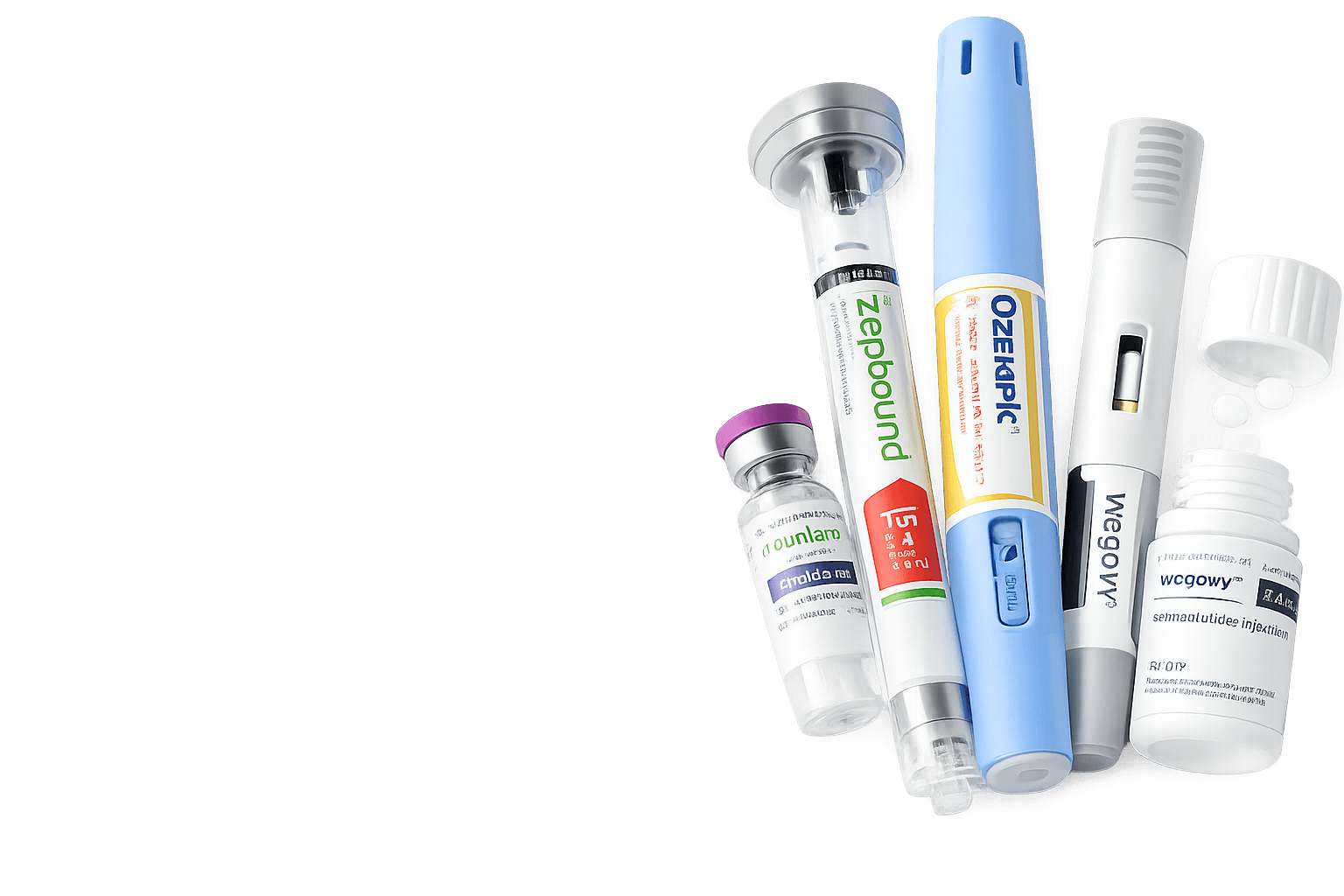
"GLP-1" in this guide means the two molecules that account for almost all weight-loss prescribing in 2026: semaglutide (a GLP-1 receptor agonist sold as Wegovy, Ozempic and the Wegovy pill, and compounded by 503A pharmacies) and tirzepatide (a dual GIP and GLP-1 receptor agonist sold as Zepbound and Mounjaro, and compounded). Orforglipron (Foundayo), the daily non-peptide GLP-1 pill approved on April 1, 2026, appears where it is relevant to maintenance. Older drugs such as liraglutide and the non-GLP-1 medications appear only inside the meta-analyses that pooled them. How these drugs work is covered in our guide to how GLP-1 medications work; this guide starts from the day the last dose wears off.
Our top 2 picks
Our two recommended GLP-1 providers, shown with the same verified pricing and ratings as our full comparison.
Our Most Popular
1
Exceptional
9.8out of 10
Limited Offer - GLP-1 for $69/mon
Money-back guaranteeFree expedited delivery
Treatments offered
Compounded semaglutide injections (GLP-1) · Compounded tirzepatide injections (GLP-1 + GIP) · 100% online doctor review and prescription · Dosage adjustments through the patient portal
Starting price
$79$69/month
*Compounded medications are not FDA-approved.
- Compounded semaglutide ($69/mo) and tirzepatide ($119/mo)
- 5-minute health qualifier; doctor review usually within 24 hrs
- Free 1-2 day shipping - temperature-controlled, tracked, insured
- No insurance required, no clinic visits, cancel anytime
Pricing starts at
from $69/month
Doctor-prescribed GLP-1 treatment - compounded semaglutide from $69/mo and tirzepatide from $119/mo - shipped in 1-2 days with no insurance required. Rated 3.8 across 9,604 Trustpilot reviews.
Read full embody review2
Exceptional
9.7out of 10
Most Comprehensive GLP-1 Medication Access
Transparent pricingNo insurance required
Treatments offered
Compounded semaglutide (GLP-1) injection · Compounded tirzepatide (GLP-1 + GIP) injection · Brand-name Zepbound and Wegovy · One simple injection per week
Starting price
$199$89/month
*Compounded medications are not FDA-approved.
- Compounded GLP-1 from $89/mo, GLP-1 + GIP from $149/mo
- Brand-name options too: Zepbound and Wegovy
- Clinician-guided - physician, PA, or nurse practitioner
- Free shipping (about 5-7 days)
Pricing starts at
from $89/month
Affordable GLP-1 program from $89/month - compounded semaglutide and tirzepatide plus brand-name options - with clinician-guided, self-pay care and no insurance required.
Read full altRx reviewWhy 'what happens when I stop' is the most important question in obesity medicine
For most of the history of weight-loss treatment, the hard part was losing the weight. GLP-1 medications changed that. In the pivotal trials, semaglutide 2.4 mg produced a mean loss of 14.9% of body weight at 68 weeks (STEP 1, New England Journal of Medicine, March 18, 2021) and tirzepatide 15 mg produced 20.9% at 72 weeks (SURMOUNT-1, New England Journal of Medicine, July 21, 2022), against 2% to 3% on placebo. Those are numbers that no diet programme and no earlier drug approached. So the hard part moved. In 2026 the defining question is no longer whether these drugs work but what happens afterwards, and that question is where the science, the economics and the marketing all collide.
It matters at scale. A consulting analysis reported by CBS News on October 22, 2026 estimated that roughly half of American semaglutide users now take it primarily for weight loss rather than diabetes, a population that largely pays cash or faces coverage that can end at a plan renewal. Every one of those people will, at some point, stop, pause, lapse or be forced off. The trials that follow tell us what happens when they do, and they are unusually consistent.
Three ways to frame the drugs, and why only one is right
The first frame is the diet frame: a GLP-1 is a tool that helps you lose weight, after which you keep it off with the habits you built. This is how most people start, and it is the frame the withdrawal trials contradict most directly. The second frame is the cure frame: enough time on the drug "resets" something, and you can stop. There is no evidence for this; the extension studies show appetite and weight returning regardless of how long people had been treated, within the durations studied. The third frame is the chronic-disease frame: obesity involves a biology that defends a higher weight, the drug offsets that biology while it is present, and stopping removes the offset. This is the frame the data support, the frame the FDA labels use when they describe the drugs as being for "chronic weight management," and the frame that makes the rest of this guide make sense. It is also, importantly, not a counsel of despair. Blood pressure medication works the same way, and nobody considers a person who needs it long term to have failed.
What the randomized trials showed when people stopped
Four trials have randomized or followed people off semaglutide or tirzepatide after substantial weight loss and measured what happened. They are the foundation of everything written about regain, and they are worth knowing by name because much of what is written about them is wrong in the details.
| Trial (publication) | Drug | Design | Loss before stopping | What happened off drug | What happened staying on |
|---|---|---|---|---|---|
| STEP 1 extension (Diabetes, Obesity and Metabolism, April 19, 2022) | Semaglutide 2.4 mg | 327 participants followed for 52 weeks after 68 weeks of treatment ended | 17.3% (semaglutide arm) | Regained 11.6 percentage points, about two-thirds; net 5.6% below baseline at week 120 | Not studied in the extension |
| STEP 4 (JAMA, March 23, 2021) | Semaglutide 2.4 mg | 803 randomized after a 20-week run-in to continue or switch to placebo for 48 weeks | 10.6% | Regained 6.9 percentage points; net 5.0% below baseline at week 68 | Lost a further 7.9 points; 17.4% below baseline |
| SURMOUNT-4 (JAMA, December 11, 2023) | Tirzepatide 10 or 15 mg | 670 randomized after a 36-week lead-in to continue or switch to placebo for 52 weeks | 20.9% | Regained 14.0 percentage points; net 9.9% below baseline at week 88 | Lost a further 5.5 points; 25.3% below baseline |
| SURMOUNT-MAINTAIN (The Lancet, May 12, 2026) | Tirzepatide | 378 randomized after a 60-week lead-in to full dose, 5 mg or placebo for 52 weeks | About 22% (open-label phase) | Placebo: 9.9% below baseline at week 112, with rescue allowed after regaining half | Full dose 21.9%, 5 mg 16.6% below baseline |
Sources: Wilding et al., Weight regain and cardiometabolic effects after withdrawal of semaglutide: the STEP 1 trial extension, Diabetes, Obesity and Metabolism, 2022; Rubino et al., Effect of continued weekly subcutaneous semaglutide vs placebo on weight loss maintenance (STEP 4), JAMA, 2021; Aronne et al., Continued treatment with tirzepatide for maintenance of weight reduction (SURMOUNT-4), JAMA, 2023; Horn et al., Tirzepatide for maintenance of bodyweight reduction (SURMOUNT-MAINTAIN), The Lancet, 2026. SURMOUNT-MAINTAIN is covered in its own section below.
STEP 1 extension: the two-thirds figure
This is the study behind the sentence you have read everywhere: "people regained two-thirds of the weight within a year." The detail matters. STEP 1 treated people for 68 weeks with semaglutide 2.4 mg plus lifestyle counselling; at the end, both the drug and the counselling stopped, and 327 of the original 1,961 participants were followed for another year without either. The semaglutide group had lost 17.3% at week 68 and had regained 11.6 percentage points by week 120, leaving them 5.6% below where they started. The placebo group, who had lost 2.0%, regained 1.9 points. So two-thirds of the loss returned, one-third did not, and the regain happened without any structured support, which is more like real life than the trial itself was. The authors also reported that the improvements in blood pressure, blood lipids and HbA1c seen on treatment had reverted toward baseline by week 120, a point we come back to.
STEP 4: the cleanest test
STEP 4 is the better-designed study of the stopping question because it was randomized at the moment of stopping. Everyone took semaglutide for 20 weeks, reaching the full 2.4 mg dose and losing 10.6% on average. Then 803 people were randomly assigned either to keep taking it or to switch to a placebo injection, without knowing which, for 48 more weeks. Those who continued lost a further 7.9%. Those who switched regained 6.9 percentage points. The gap between the arms at week 68 was 14.8 percentage points of body weight, and it opened within weeks of the switch. Because the placebo group did not know they had been switched and kept receiving the same lifestyle counselling, this trial isolates the drug effect from motivation, support and expectation. The weight came back anyway.
SURMOUNT-4: tirzepatide, larger loss, larger regain
SURMOUNT-4 ran the same design with tirzepatide. A 36-week open-label lead-in at 10 or 15 mg produced a mean loss of 20.9%. Then 670 people were randomized to continue or to switch to placebo for 52 weeks. Continuing produced a further 5.5% loss, for 25.3% in total. Switching produced a regain of 14.0 percentage points, leaving that group 9.9% below baseline. Two things are worth noticing. The regain was larger in absolute terms than in STEP 4 because the loss had been larger; as a share of the loss it was similar, roughly two-thirds. And the placebo group was still carrying a weight loss at week 88 that would count as a success for most diet programmes, which is the optimistic reading of the same data. A post hoc analysis of the trial published in JAMA Internal Medicine in December 2025 (summarized in an American College of Cardiology journal scan) reported that more than four in five of those switched to placebo had regained at least a quarter of their lost weight within the year, which is the distribution behind the average: regain was the norm, not the result of a few outliers.
What the trials have in common
Regain began within the first month off the drug in every study, continued through the whole follow-up period without clearly flattening, was proportional to the weight lost, and occurred despite continued lifestyle counselling in the trials that provided it. Nobody in these studies was told how to taper, because nobody was tapered: the switch to placebo was abrupt by design. Whether a taper changes the curve is a separate question with, as of October 2026, no randomized answer; we cover what is registered below.
The 2026 meta-analyses: how fast, how much, and when it stops
Individual trials tell you what happened to the people in them. Two meta-analyses published in 2026 pooled every study they could find and answered the questions patients actually ask: how fast does weight come back, how much of it, and does the regain ever plateau?
BMJ, January 2026: 0.4 kg a month, 0.8 for the new drugs
The larger of the two was led by Sam West at the University of Oxford's Nuffield Department of Primary Care Health Sciences and published in The BMJ on January 7, 2026 (doi 10.1136/bmj-2025-085304; the university's summary gives the headline figures). It pooled 37 studies with 9,341 adults who had taken a weight-management medication for an average of 39 weeks and were then followed for an average of 32 weeks after stopping. Its findings:
- Weight rose by an average of 0.4 kg (about 0.9 lb) per month after the drugs were stopped, across all medications.
- For the newer drugs, semaglutide and tirzepatide, regain was faster, at about 0.8 kg per month.
- Regain after stopping a medication was faster than regain after ending a behavioural weight-loss programme by about 0.3 kg per month, regardless of how much weight had been lost.
- Extrapolating the pooled rate, the authors estimated that weight would return to its starting point roughly a year and a half to two years after stopping, with the improvements in blood pressure, blood sugar and cholesterol projected to revert sooner.
Two cautions, both the authors' own. The return-to-baseline estimate is a projection beyond the average follow-up, not an observation, because few studies followed people for two years. And the pooled studies differ in drugs, doses and populations, so 0.4 kg a month is a central tendency, not a forecast for an individual.
eClinicalMedicine, 2026: the shape of the curve
A second group used a different method, meta-regression, to reconstruct the regain curve over time from 48 studies and published it in eClinicalMedicine, a Lancet journal (doi 10.1016/j.eclinm.2026.103796). Its model found that about 60% of the lost weight had been regained by 52 weeks after stopping, and that the curve flattened at around 60 weeks with roughly three-quarters of the loss regained, implying that about a quarter of the loss might be sustained. The plateau is a model projection drawn from the available follow-up and the authors present it as such; it is consistent with the one-third sustained in the STEP 1 extension and the roughly half of the loss still present in SURMOUNT-4's placebo arm at a year, and it is the most optimistic reading of the pooled data that the evidence supports. An accompanying commentary in the same journal made a point that recurs throughout this guide: at the time of writing, there were no randomized trials of tapering regimens or structured maintenance protocols, and clinical guidelines offered no recommendations on how to stop.
A third model: half the loss back in about seven and a half months
A smaller analysis in Endocrinology, Diabetes and Metabolism reconstructed time-point data from six randomized trials with 1,776 participants and estimated that half of the treatment-related weight loss returns within about 7.5 months of discontinuation. Its inputs overlap heavily with the trials in the table above, so it is not independent confirmation so much as another way of reading the same curves, but the number is a useful rule of thumb: whatever you lost, expect the midpoint of regain somewhere around the eighth month off treatment if nothing else changes.
How to use these numbers
Put together, the three analyses say the same thing from different angles. Regain starts immediately, runs at something like 0.4 to 0.8 kg a month, reaches half of the loss in well under a year, and may flatten in the second year with a fraction of the loss, perhaps a quarter to a third, still in hand. For a person who lost 20 kg (44 lb) on tirzepatide, that is roughly 13 to 15 kg back within about a year and a half, and perhaps 5 to 7 kg kept. For someone who lost 12 kg on semaglutide, it is roughly 8 kg back and 4 kept. Those are arithmetic on the pooled averages, not predictions, and the next section explains why individual experience in the real world is often better.
What To Know Before Starting GLP-1 Treatment
Before starting GLP-1 treatment, it's important to understand a few key things. These medications require a prescription from a licensed clinician and aren't suitable for everyone. Some people may experience side effects, especially during the first few weeks as the body adjusts.
GLP-1s also tend to work best when combined with basic lifestyle habits like balanced nutrition and regular physical activity.
That's why choosing a provider that offers proper medical screening and ongoing follow-up support is essential for both safety and long-term success.

What happens in the real world: the Cleveland Clinic cohort
Trials are designed to measure a drug, so they switch people to placebo abruptly and forbid them from restarting. Real life has no such rule. The most important real-world study of stopping was published in Diabetes, Obesity and Metabolism in March 2026 by Hamlet Gasoyan and colleagues at Cleveland Clinic (Cleveland Clinic newsroom, March 12, 2026), and it changes the picture in an instructive way.
The study
The researchers followed 7,938 adults with overweight or obesity in Ohio and Florida who started injectable semaglutide or tirzepatide between 2021 and 2023, for obesity or for type 2 diabetes, and who stopped within three to twelve months. They then tracked weight for a year after discontinuation using the health system's own records.
What they found
- Patients in the obesity group had lost an average of 8.4% of their body weight before stopping, which is less than the trials because they stopped early, typically before reaching a full maintenance dose.
- One year after stopping, the obesity group had regained an average of just 0.5% of body weight. The diabetes group had, on average, lost a further 1.3%.
- Averages hide the split. About 55% of the obesity group gained weight after stopping, and about 45% either maintained their weight or kept losing. In the diabetes group the split was roughly 44% gained, 56% maintained or lost.
- The explanation the authors offer, backed by their own data, is that stopping was often not permanent: about one in five restarted the same drug within the year, and more than a third transitioned to an alternative obesity treatment. "Many patients who stop semaglutide or tirzepatide restart the medication or transition to another obesity treatment, which may explain why they regain less weight than patients in randomized trials," Gasoyan said in the clinic's release.
Why this matters more than the headline
The optimistic reading is that nearly half of real patients kept their weight off for a year. The accurate reading is that nearly half kept their weight off because a large share of them did not actually stay off treatment. Both are true, and the second is the actionable one: the single most common thing that distinguished real-world patients from trial participants was that they were allowed to go back on, and many did. The study also had limits the authors state plainly. It came from one health system in two states, it could not capture every intervention patients used, it measured people who stopped early rather than at a goal weight, and a year is short.
What "early stoppers" tell us
The population here is worth dwelling on because it describes most online GLP-1 patients. People who stop within a year usually stop for cost, side effects or supply, not because they reached a goal, and they stop having lost less than the trials' 15% to 21%. Smaller losses mean smaller absolute regain, and a lower dose at the time of stopping may mean a gentler return of appetite, though the study did not test that. If you are three to nine months in and weighing whether to stop, this is the study that most resembles your situation, and its central lesson is that the people who did best were those who treated stopping as a pause with an exit back onto treatment rather than as the end.
Why the weight comes back: the biology, not the willpower
People who regain weight after stopping a GLP-1 almost always describe it the same way: the hunger came back, the food noise came back, portions that had felt like plenty stopped feeling like enough. That is not a character change. It is the predictable result of removing a drug from a body that has been adapting, the whole time, to the weight it lost.
First, the drug leaves
Semaglutide has an elimination half-life of about one week and tirzepatide about five days, according to their prescribing information. A drug is essentially gone after about five half-lives, so semaglutide's effect fades over roughly five weeks and tirzepatide's over roughly three to four. That is why most people feel nothing different in the first week or two after a missed dose and then notice appetite returning in the third and fourth week. The slowing of stomach emptying reverses on the same timeline, which is why fullness after meals shortens. Nothing about this is a withdrawal syndrome; it is the drug's effect ending.
Second, the adaptations to weight loss do not leave
The more important fact is what the drug was holding back. In 2011, Priya Sumithran and colleagues at the University of Melbourne published a study in the New England Journal of Medicine (Long-Term Persistence of Hormonal Adaptations to Weight Loss) in which 50 adults lost an average of 13.5 kg on a ten-week very-low-energy diet. The researchers measured appetite hormones before, after, and a year later. At 62 weeks, leptin, peptide YY, cholecystokinin and insulin (hormones that signal fullness or energy sufficiency) were still significantly below baseline, while ghrelin (the hunger hormone), gastric inhibitory polypeptide and pancreatic polypeptide were still significantly above it, and participants' reported hunger was still higher than before they dieted. The authors' conclusion was that the circulating mediators of appetite that encourage weight regain "do not return to pre-weight-loss levels" a year later, and that long-term strategies to counteract them would be needed to prevent relapse. That study did not involve a GLP-1. It describes what happens to anyone who loses a substantial amount of weight by any means, and it is the backdrop against which the GLP-1 withdrawal trials should be read: the drug does not create the hunger that follows stopping, it had been suppressing hunger that weight loss itself amplified.
Third, the body burns less than its new size predicts
Energy expenditure falls with weight loss, partly because a smaller body needs less, and partly, in many people, beyond what the smaller size explains. The most cited evidence is Fothergill and colleagues' six-year follow-up of fourteen contestants from the television programme The Biggest Loser, published in Obesity in 2016 (Persistent metabolic adaptation 6 years after "The Biggest Loser" competition). Six years after losing an average of 58 kg, participants had regained an average of 41 kg, yet their resting metabolic rate was still about 700 kcal a day below where it had started, roughly 500 kcal a day lower than their body composition and age predicted. Two caveats belong next to that number. The intervention was extreme and the sample tiny, and co-author Kevin Hall has written that the finding was widely over-read as proof that dieting "destroys metabolism," when the contestants had in fact kept off a clinically meaningful average of about 12% of their starting weight. The sober version is that some degree of metabolic adaptation is real, persistent and proportional to the effort to stay lighter, and that it is one of several forces a person who stops a GLP-1 is leaning against.
Fourth, the brain's set point does not move on the drug's schedule
The language of a "set point" is a simplification, but the evidence that the body defends a weight range through appetite, satiety and expenditure is robust, and there is no evidence that eighteen months of pharmacological weight loss moves that defended range downward. The withdrawal trials are, in effect, a test of the hypothesis that it does, and they came back negative within their durations. Whether longer treatment, say three to five years, would be different is unknown, because no trial has withdrawn people after that long.
What this means for you
If you stop, you should expect hunger to return within about a month and to be somewhat stronger than you remember from before you started, because your body is now defending a weight it has lost. You should expect your maintenance calorie needs to be lower than a calculator predicts for your new size. And you should treat both as facts to plan around rather than failures to feel ashamed of. The plateau guide covers the same adaptations as they show up during treatment; off treatment they are simply unopposed.
Who regains least? What the data can and cannot tell you
Everyone wants to know whether they will be in the minority who keep the weight off. The honest answer is that the studies were not designed to find out, and the predictors that have been reported are modest. Here is what can be said with support, and what cannot.
Supported by data
- Staying on something. The single strongest predictor of holding weight in the Cleveland Clinic cohort was not stopping for good: restarting the same drug or switching to another treatment. In SURMOUNT-MAINTAIN, a lower dose held most of the loss. This is not a loophole; it is the finding.
- How much you lost. Regain in the trials was proportional to the loss, so larger losers regained more kilograms but ended up further below baseline. In SURMOUNT-4 the placebo arm was still 9.9% down a year after stopping; in STEP 4 the equivalent figure was 5.0%. If you lost a lot, you are likely to keep more in absolute terms even if you regain the typical share.
- Having diabetes. In the Cleveland Clinic study, the type 2 diabetes group lost further weight after stopping on average. The authors do not claim to know why; plausible explanations include other glucose-lowering drugs, continued care and different reasons for stopping. It is an observation, not a mechanism.
- Stopping early at a smaller loss. Also from Cleveland Clinic: people who stopped within a year, having lost about 8%, regained very little on average. Part of this is restarting, part may be that there was less to regain.
Plausible but not demonstrated
- Preserving muscle during the loss. Muscle is metabolically active, and people who lose proportionally more fat and less lean mass should, in principle, face a smaller drop in resting expenditure. The body-composition data from the trials and from the muscle-preserving drug studies are covered below. What does not yet exist is a trial showing that people who protected lean mass regained less after stopping.
- Habits built during treatment. Every clinician will tell you, and the trials' lifestyle counselling was premised on it, that the eating patterns, protein intake, resistance training and sleep routines established while appetite was suppressed are what you fall back on. It is sensible, and the STEP 1 extension, where counselling stopped with the drug, is consistent with it mattering. It has not been isolated in a randomized comparison.
- A slow taper rather than an abrupt stop. Untested in any published randomized trial as of October 2026, though trials are registered. See the tapering section.
Not supported
- "Being disciplined." The placebo arms in STEP 4 and SURMOUNT-4 were full of people who had just lost 10% to 21% of their body weight under supervision, who did not know they had been switched, and who were still receiving counselling. They regained anyway. Discipline was not the variable.
- Length of time on the drug "resetting" appetite. No withdrawal study has found that longer treatment produced less regain, within the durations studied.
The practical reading: you cannot reliably predict in advance whether you will hold your weight off treatment, and the people who ask the question are often those who have lost the most, who face the largest absolute regain. What you can do is stack the modest, plausible factors in your favour (muscle, habits, a planned rather than accidental stop) and, above all, keep the door back onto treatment open. The next sections are about the forms that door can take.
The maintenance-dose question: what SURMOUNT-MAINTAIN finally answered
For years the most common clinical compromise, stepping down to a lower dose once a goal weight is reached, rested on experience rather than evidence. On May 12, 2026, The Lancet published the first randomized trial designed to test it (Horn, Aronne, Wharton et al., SURMOUNT-MAINTAIN; the American College of Cardiology summary and the trial's published design paper give the details used here).
The design
441 adults with obesity in the United States took tirzepatide open-label for 60 weeks, titrating to the maximum dose they tolerated. The 378 who had lost at least 5% were then randomized 3:3:2, double-blind, to one of three arms for a further 52 weeks: continue at their maximum tolerated dose (140 people), step down to 5 mg (144) or switch to placebo (94). From week 24 of the maintenance phase, anyone who had regained more than half of their lost weight could be rescued back onto tirzepatide. 91% completed the study.
The results
| Arm (weeks 60 to 112) | Weight change from original baseline at week 112 | Difference vs placebo |
|---|---|---|
| Maximum tolerated dose | -21.9% | -12.0 points |
| 5 mg | -16.6% | -6.6 points |
| Placebo (rescue allowed from week 24) | -9.9% | - |
At 24 weeks after randomization, before any rescue was permitted, the arms stood at 22.4%, 18.8% and 12.3% below baseline respectively, so the placebo group had already regained close to half its loss in six months, matching the pattern in SURMOUNT-4. The 5 mg group gave back a few percentage points and then held. Adverse events were in line with the drug's known profile, which has consistently clustered around dose increases rather than stable or reduced doses.
How to read it
Three conclusions are safe. A reduced dose of tirzepatide preserves most, but not all, of the weight lost at a higher dose over one year; the 5 mg arm kept about three-quarters of the full-dose arm's advantage over placebo. Stopping entirely produced the familiar regain, blunted here by rescue. And the comparison that most people care about, 5 mg versus full dose, is a trade of roughly five percentage points of body weight for the lowest marketed dose, which for someone paying by the milligram is a substantial saving. Two cautions belong alongside. A year of maintenance is short for a lifelong condition, as the Lancet commentary noted; and the trial tested one lower dose of one drug in people who had tolerated and responded to it. It does not tell you the lowest dose that works for you, and it does not transfer automatically to semaglutide, for which no equivalent randomized dose-reduction trial has reported.
What exists for semaglutide
Less. The strongest published evidence on reduced semaglutide regimens is a retrospective case series from Scripps Clinic in San Diego, published in Obesity in early 2026 (Scripps summary). Of 38 patients who had plateaued on weekly dosing, 30 moved to a less frequent schedule, most commonly every other week; four declined to step down and four returned to weekly dosing after regaining. Across an average of 36 weeks on the reduced schedule, mean weight went from 74.1 kg to 72.4 kg, body fat continued to fall and muscle mass was stable. It is a small, uncontrolled, single-centre series and its authors call for proper trials, but it is a proof of concept that some people maintain on less, and that the ones who do not can be identified quickly and put back on the full schedule. A randomized non-inferiority trial comparing a semaglutide taper with full-dose maintenance (NCT07783854, 72 participants, 24-week primary endpoint) was listed to start in September 2026 and had not reported as of this writing.
What a maintenance dose means in practice
If you are considering it, the conversation with your prescriber has three parts: which dose to step down to (SURMOUNT-MAINTAIN tested 5 mg of tirzepatide; clinicians prescribing semaglutide often discuss 1 mg or 1.7 mg, without randomized support), how you will measure whether it is working (weekly weights for the first three months, with an agreed threshold, perhaps a 3% to 5% regain, that triggers a return to the previous dose), and what it costs. On price, the picture is favourable in one specific way: several of the providers we track charge the same flat price at every dose, so stepping down saves nothing with them, while others and the brand-name products price by dose. The true-cost guide sets out who prices how.
Tapering off: what clinicians do, and what has actually been tested
A taper, meaning a planned reduction in dose or frequency over weeks or months with the intention of eventually stopping, is different from a maintenance dose, which is a planned reduction with the intention of staying on. The two are often confused in articles about "weaning off Ozempic," so it is worth being precise: the evidence for a maintenance dose now includes a randomized trial; the evidence for a taper as a way of preventing regain after full discontinuation does not.
Why there is no evidence
Every withdrawal trial to date switched people to placebo abruptly, because the question those trials asked was whether the drug was still doing anything, and an abrupt switch is the cleanest way to find out. The eClinicalMedicine commentary on the 2026 meta-analysis noted the absence of randomized tapering studies and the silence of clinical guidelines on how to stop, and a 2025 review of the metabolic rebound after discontinuation in the same journal made the same observation about the major obesity guidelines: they do not offer tapering recommendations because there are no data on which to base them. A 2026 narrative review in Diabetes, Obesity and Metabolism (doi 10.1111/dom.71075) catalogued the de-escalation strategies in use, dose reduction, extended dosing intervals, switching agents and structured discontinuation, and reached the same conclusion: they are being used far ahead of their evidence.
What is registered
That is changing. Trials now on the US registry include a comparison of tapered versus abrupt discontinuation of GLP-1 therapy (NCT07859176) and the semaglutide taper-versus-maintenance study mentioned above. Neither had results as of October 2026. If you are reading this in 2027 or later, search those identifiers; this is the single area of the guide most likely to be overtaken.
What clinicians actually do
In the absence of trials, prescribers who help people stop tend to borrow the logic of titration in reverse. The pattern our medical reviewer and the published reviews describe is: step down one dose level at a time, hold each level for at least four weeks (long enough for the drug to reach a new steady state and for appetite at that level to become apparent), and move on only if weight is stable; if weight rises more than an agreed amount at any step, hold there or go back up. Some prescribers extend the interval between injections instead of lowering the dose, as in the Scripps series. The purpose is less about the pharmacology, which does not require a taper for safety, and more about information: a stepwise descent shows you, dose by dose, where your appetite and weight begin to move, which an abrupt stop does not.
What not to do
Do not taper by splitting doses, stretching a vial beyond its beyond-use date, or improvising a schedule from an online forum. Compounded vials in particular have a labelled beyond-use date (usually 28 days from first puncture; see the 28-day rule explainer), and using a vial for two or three months to "stretch" it means injecting a product past its tested stability. If cost is the reason you are stretching, the cheaper verified plans in the cost section are a safer answer than a slower vial.
Abrupt stopping is not dangerous in itself
Unlike some medications, GLP-1s do not produce a withdrawal syndrome and there is no safety requirement to taper; the trials stopped people cold without harm. The risks of an abrupt stop are the return of appetite and weight and, for people with type 2 diabetes, the loss of glucose control, which needs a plan with the prescriber managing the diabetes. If you must stop suddenly, because of pregnancy, surgery, an adverse event or a lost supply, you are not endangering yourself by doing so; you are simply starting the clock described earlier.
Microdosing GLP-1s: the trend, the evidence gap and the risks
"Microdosing" is the term that spread through social media and some telehealth marketing in 2025 and 2026 for taking a GLP-1 at a dose well below the lowest labelled dose, often a fraction of the 0.25 mg starting dose of semaglutide or the 2.5 mg starting dose of tirzepatide, either to maintain weight, to blunt appetite with fewer side effects, or for claimed benefits unrelated to weight. Because it is pitched specifically at people who want to come off a full dose, it belongs in this guide, and the evidence section is short because the evidence is.
What has been studied
No randomized trial has tested a sub-starting dose of semaglutide or tirzepatide for weight maintenance or for anything else. The starting doses themselves were chosen in the development programmes as the lowest that could be tolerated as a ramp, not as effective doses; in the dose-ranging studies the lowest doses produced the least weight loss, and nothing below them was tested. The reduced-dose evidence that does exist (SURMOUNT-MAINTAIN's 5 mg arm, the Scripps every-other-week series) used labelled doses at labelled or extended intervals, which is a different thing from a fraction of a starting dose. Professional societies have not endorsed sub-therapeutic dosing, and academic medical centres including Cleveland Clinic and Cedars-Sinai have published cautions pointing out that it is untested. Any claim that microdosing "maintains weight loss" is, as of October 2026, a hypothesis.
Why it is mostly a compounded-product phenomenon
Brand-name pens deliver fixed doses and cannot easily be microdosed. Compounded vials can be drawn to any volume, which is why the microdosing market and the compounded market overlap almost entirely. That matters because it combines two uncertainties: an unstudied dose and a product that is not FDA-approved. The FDA's page on its concerns with unapproved GLP-1 drugs specifically lists dosing errors among the adverse events it has received for compounded semaglutide and tirzepatide, including patients drawing up the wrong volume from a vial. Industry reporting of the agency's tally (Becker's Hospital Review, citing the FDA's figures as of May 31, 2026) put the reports at roughly a thousand for compounded semaglutide and over seven hundred for compounded tirzepatide, figures we repeat as reported and have not verified against the agency's database. Microdosing, by definition, asks the patient to measure very small volumes precisely, which is exactly the task the reports describe going wrong.
The regulatory backdrop
Compounded GLP-1s remain legal in 2026 only as patient-specific prescriptions from a state-licensed 503A pharmacy for a documented clinical need, since the FDA declared the shortages of tirzepatide (December 19, 2024) and semaglutide (February 21, 2025) resolved. "A lower dose than is marketed" is one of the clinical needs some prescribers document, which is why some telehealth programmes can offer microdosing at all; whether a given prescription meets the standard is a matter between the prescriber, the pharmacy and their state boards. Reporting in 2026 described FDA proposals to further restrict large-scale compounding of these drugs; we have not been able to confirm the current status of those proposals and do not rely on them here. Our guide to compounded vs brand-name semaglutide covers the framework in detail.
Muscle: the part of the weight you lose that you most want to keep
Of all the things that determine what happens after you stop, the composition of the weight you lost is the one most within your control while you are still losing it. Weight lost as fat is the point of treatment. Weight lost as lean mass, which is mostly skeletal muscle, lowers your resting energy expenditure, your strength and, in older adults, your resilience, and it is not automatically regained as muscle when weight returns. Here is what the trials measured, what the newer studies show, and what to do.
How much of the loss is lean mass in the trials?
Both pivotal trials ran sub-studies using DXA body scans. In STEP 1, 140 participants were scanned at baseline and week 68 (Wilding et al., conference abstract; the trial's registry results report the same data): on semaglutide, total body weight fell 15.0%, fat mass fell 19.3%, visceral fat fell 27.4% and lean mass fell 9.7%, so the share of the body that was lean rose by three percentage points. In SURMOUNT-1, 160 participants were scanned at baseline and week 72 (Look et al., Diabetes, Obesity and Metabolism, 2025): tirzepatide reduced fat mass by roughly a third and lean mass by roughly a tenth, and the proportion of weight lost as lean versus fat was consistent across subgroups and comparable to the placebo group's, which is to say comparable to ordinary weight loss. The widely quoted claim that "40% of the weight lost on GLP-1s is muscle" is a derived figure from these sub-studies, not a number either paper reports, and it conflates lean mass (which includes water and organ tissue) with muscle. The accurate statement is that a quarter to perhaps 40% of the weight lost in the trials was lean mass, that this is similar to the proportion lost with diet alone, and that because the absolute losses were large, the absolute lean loss (around 5 to 6 kg in both sub-studies) was large too.
Does it matter?
For most adults under 60 who lose 15% of their weight and keep their ratio of lean to fat improving, the lean loss is a feature of substantial weight loss rather than a hazard. It matters more for older adults, for anyone starting with low muscle mass, and for the question this guide is about: when weight returns after stopping, it returns disproportionately as fat unless something is done to rebuild muscle, so each cycle of loss and regain can leave a person with a higher fat percentage than before. A 2026 preprint on medRxiv (not yet peer-reviewed, and reported here with that caveat) analysed body composition in GLP-1 patients and reported that about a third lost more than 5% of their lean mass, with a minority showing larger "depletive" losses; the proportion differed between the two drugs but the finding needs confirmation in a reviewed study before it should change anyone's choice of molecule.
What protects muscle: the evidence
Two interventions have data. The first is the obvious one: resistance training and adequate protein. A 12-month study of 115 adults on semaglutide published in Diabetes, Obesity and Metabolism (SEMALEAN, full text) tracked body composition and strength through treatment: fat mass fell 14% by month seven and 18% by month twelve, lean mass fell about 3 kg by month seven and then stabilised through month twelve, grip strength rose by about 4.5 kg, and the proportion of participants meeting criteria for sarcopenic obesity fell from 49% to 33%. In other words, with attention to strength and nutrition, lean loss was modest, stopped early and came with gains in function rather than losses. A dedicated randomized trial of resistance training alongside GLP-1 therapy, led from the University of Exeter, is registered as NCT07457437.
The second is pharmacological and not yet available. Bimagrumab, an antibody that blocks the activin receptor and increases muscle mass, was tested with semaglutide in the phase 2b BELIEVE trial (presented at the American Diabetes Association meeting in June 2025 and published in Nature Medicine in 2026). Over 72 weeks, the combination produced 22.1% weight loss versus 15.7% for semaglutide alone, with fat mass falling 45.7% on the combination versus 27.8% on semaglutide; lean mass fell 7.4% on semaglutide alone, 2.9% on the combination, and rose 2.5% on bimagrumab alone. Side effects on the combination included acne and muscle spasms. A trial pairing bimagrumab with tirzepatide is registered (NCT05933499). None of this is approved or prescribable in 2026; it is included because it confirms, in a controlled setting, that the lean-mass loss on GLP-1s is modifiable and that modifying it does not blunt fat loss.
What to do, in order
- Lift something twice a week, starting now. The evidence for resistance training preserving lean mass during caloric restriction predates GLP-1s and is consistent; SEMALEAN is what it looks like with the drug. Two or three sessions a week of progressive, whole-body resistance work (bodyweight, bands or weights) is the pattern the trials and guidelines use. Walking is good for you and does not do this job.
- Eat protein deliberately, because the drug will not make you want to. Appetite suppression hits protein-rich meals as hard as anything else, and people on GLP-1s commonly under-eat protein. Your prescriber or a dietitian can set a target for your weight and kidney function; the point is to have one and to hit it at every meal rather than once a day.
- Measure something other than weight. A monthly waist measurement, a grip-strength or sit-to-stand test, or periodic body-composition scans tell you whether what you are losing is fat. If you are losing strength, that is a signal to slow the loss, eat more protein and train, not to stop the drug.
- Keep lifting after you stop. If weight returns, training determines how much of it returns as muscle. This is the one factor that influences not just how much you regain but what you regain.
Our guide to "Ozempic face" covers the related, more visible question of facial volume loss, which follows the same logic: pace, protein and training.
Shop GLP-1 plans by product
The lowest published plans - cheapest first, conditions under each price.


What else reverses when you stop: blood pressure, blood sugar, cholesterol and heart risk
Weight is the number people watch, but it was never the only thing the drug was doing. The withdrawal studies measured the cardiometabolic markers too, and they moved back with the weight.
The STEP 1 extension findings
In the year after semaglutide and the lifestyle programme stopped, the improvements in systolic and diastolic blood pressure, HbA1c, C-reactive protein and blood lipids that had been seen at week 68 reverted toward their baseline values by week 120 (Wilding et al., Diabetes, Obesity and Metabolism, 2022). The authors' phrasing was careful: "toward" baseline, because at week 120 participants were still 5.6% lighter and some markers remained slightly better than at the start. But the direction was uniform, and the BMJ meta-analysis a few years later projected, across its pooled studies, that the cardiometabolic improvements would return to baseline somewhat before weight did, roughly in the range of a year and a half.
For people with prediabetes or type 2 diabetes
This is the group for whom stopping has the most immediate consequence. GLP-1s lower blood glucose directly, independent of weight, so a person with type 2 diabetes who stops will usually see glucose rise within weeks, before much weight has returned, and will need their diabetes regimen reviewed by the prescriber who manages it. In STEP 1, which excluded people with diabetes, a large share of participants with prediabetes at baseline had returned to normal glucose regulation on treatment; the extension showed that benefit eroding off treatment. If you were told your prediabetes had resolved on a GLP-1, treat that as "controlled" rather than "cured" when you weigh stopping.
The heart: why the long-term data push toward staying on
The SELECT trial (Lincoff et al., New England Journal of Medicine, November 11, 2023) randomized 17,604 adults with overweight or obesity and established cardiovascular disease, but without diabetes, to semaglutide 2.4 mg or placebo and followed them for a mean of about 40 months. Semaglutide reduced the composite of cardiovascular death, heart attack and stroke by 20% (hazard ratio 0.80). That result is the basis of Wegovy's cardiovascular indication and it has a direct bearing on the stopping decision for anyone in that population: the benefit was measured in people who kept taking the drug, and there is no evidence that it persists after discontinuation. For a person with prior heart disease, the question "should I stop" is a cardiology question as much as a weight question, and the answer from the trial data leans toward continuing in some form.
What does not reverse
The weight you keep off keeps its benefits. In SURMOUNT-4's placebo arm, people were still almost 10% below baseline after a year off, and a 10% loss carries meaningful improvements in blood pressure, glucose and lipids by any standard. The habits, the muscle you built and anything structural you changed, such as a medication for blood pressure that you no longer need, are yours. The point of this section is not that stopping undoes everything; it is that the markers follow the weight, so the plan to stop should include rechecking them at three and twelve months rather than assuming they held.
The cost of staying on: what maintenance actually costs at verified prices
Cost is the most common reason people stop, and it is the one where the facts have changed most in the past two years. If you started on a brand-name pen at $1,000 or more a month and your coverage ended, the alternatives below are what the decision to stop should be weighed against. Every provider price here was checked on the provider's own site on October 16, 2026 and is shown with its condition; prices change, and the provider's page is the live source.
Compounded maintenance: the verified floor
| Provider | Semaglutide / month | Tirzepatide / month | Condition | Cost of a 12-month year (semaglutide) |
|---|---|---|---|---|
| welludr | $49 | $89 | 12-month plan; same price at every dose | $588 |
| embody | $69 | $119 | Month to month, cancel anytime | $828 |
| altRx | $89 | $149 | Flat at every dose; pause or cancel anytime | $1,068 |
| Medvi | $99 (promo; regular $199) | $166 (promo; regular $299) | All-inclusive, no membership | $1,188 if the promotional rate held all year |
| DirectMeds | $147 | $147 | Flat at every dose, no membership | $1,764 |
The full index of every provider we track, including the $149 to $199 tier, is on the weight-loss comparison; the true-cost guide explains which prices rise after month one and which do not. Two points specific to maintenance. First, several providers charge the same price at every dose, so stepping down to a maintenance dose saves nothing with them but costs nothing extra either; with per-dose pricing the lower dose is cheaper. Second, the 12-month plan that produces the $49 figure is a commitment, which suits someone who has decided to stay on and does not suit someone testing whether they can come off. Our before-you-prepay guide lists the questions to ask.
Brand-name maintenance
Brand-name Zepbound bought for cash through telehealth runs $1,249 a month at altRx and $1,599 at welludr. At ro, the Wegovy pill is $149 for the first month and then $299 a month plus a membership of $39 and then $74 to $149 a month, prices verified in August 2026. Those are the figures against which "I can't afford to stay on" is usually measured, and they are ten to twenty times the compounded floor. Manufacturer programmes narrow the gap: Foundayo lists self-pay prices of $149 to $349 a month by dose, and the manufacturers' savings offers are reported to bring brand-name products to $25 a month for people with commercial insurance that covers them. Those manufacturer figures are as reported by the dated sources in our Zepbound and Wegovy pill price guides and are not verified by us.
Medicare
Since July 1, 2026, the Medicare GLP-1 Bridge pilot has let eligible beneficiaries get the Wegovy injection and pill, the Zepbound KwikPen and Foundayo for a flat $50 a month copay, unchanged as the dose rises, through December 31, 2027. For a Medicare patient weighing whether to stop because of cost, this programme is the first thing to check; our Medicare guide covers eligibility. Medicare does not cover compounded GLP-1s.
The arithmetic that should frame the decision
A year on the cheapest verified compounded semaglutide plan costs $588. A year of tirzepatide at the cheapest month-to-month price costs $1,428. Against those figures, the withdrawal data say that stopping is likely to return most of the lost weight within a year to eighteen months and to take the cardiometabolic improvements with it. Whether staying on is worth it is a personal decision, but it should be made against the compounded price, not the brand-name one, and it should be made knowing that the trade is not "pay or stop" but "pay $49 to $199 a month or accept the regain curve." For many people reading this, that reframing is the whole answer.
Switching instead of stopping: a different molecule, a cheaper plan or a pill
The Cleveland Clinic data made a point that deserves its own section: more than a third of real-world patients who "stopped" semaglutide or tirzepatide transitioned to another obesity treatment, and that group is part of why real-world regain looked so much better than the trials. Switching is the most under-discussed alternative to stopping. There are four forms.
Same drug, cheaper source
The most common switch in 2026 is from a brand-name pen to a compounded version of the same active ingredient when coverage ends. A licensed clinician at the new provider runs an intake, reviews your current dose and, where appropriate, continues it rather than restarting at the bottom, though some providers insist on their own titration. The product changes from a factory pen to a pharmacy vial, which is a real difference covered in the compounded vs brand-name guide, and the price changes by an order of magnitude. If the reason you are stopping is money, this is the switch to evaluate first.
Semaglutide to tirzepatide, or back
People who plateau or who struggle with side effects on one molecule are sometimes moved to the other. Head-to-head, tirzepatide produced more weight loss in SURMOUNT-5 (NEJM, 2025), so a switch from semaglutide to tirzepatide at a plateau has a rationale; a switch the other way is usually about cost or tolerability, since compounded semaglutide is $40 to $100 a month cheaper at the same provider. Switching molecules means a new titration, with the side effects that accompany it, and should be planned with the prescriber. The tirzepatide vs semaglutide guide covers the comparison.
Injection to pill: the maintenance case for oral GLP-1s
This is the switch with the newest evidence. Eli Lilly's ATTAIN-MAINTAIN trial (topline results in a press release of December 18, 2025; full data were promised for a later meeting and journal, and these figures should be read as company-reported until then) took people who had lost weight on injectable Wegovy or Zepbound and randomized them to switch to daily orforglipron or to placebo for 52 weeks. People switched from Wegovy to orforglipron held their weight almost exactly (a difference of about 0.9 kg over the year); people switched from Zepbound regained about 5 kg of a much larger loss; and in a post hoc look at 24 weeks, the placebo groups had already regained about 9 kg while the orforglipron groups had regained almost nothing from Wegovy and a modest amount from Zepbound. Discontinuation for adverse events was under 8% in both switch arms. Orforglipron is now Foundayo, approved April 1, 2026, with self-pay list prices of $149 to $349 a month by dose as reported in our Foundayo vs Wegovy pill guide. A separate registered trial of switching from injectable to oral GLP-1 therapy for maintenance (NCT07729332) was listed to begin in November 2026. The practical reading: a pill that holds most of an injectable's loss at a brand-name price below the injectables' brand-name price is a genuine third option between "keep injecting" and "stop," and it will suit people whose barrier was the needle or the cold chain rather than cost itself.
How to switch without a gap
The error that turns a switch into a stop is the gap: a month between the last brand-name pen and the first compounded shipment, during which the drug clears and appetite returns, after which the new provider starts you at the lowest dose and you spend two months re-titrating through side effects to get back to where you were. To avoid it, start the new intake while you still have two to three weeks of supply, tell the new clinician your current dose and how long you have been on it, ask whether they will continue it, and check the provider's shipping window (the verified windows range from one to two days at embody and DirectMeds to five to seven days at altRx). The complete guide to GLP-1 weight loss online covers the intake process step by step.
Stopping because of side effects: what to try before you quit
Side effects are the second most common reason for stopping, and the one where a conversation with the prescriber most often changes the outcome, because most GLP-1 side effects are dose-dependent and most dose-dependent side effects have a dose-based answer.
Gastrointestinal effects
Nausea, vomiting, diarrhoea, constipation and reflux are the leading adverse events on both labels and cluster around dose increases. The options before stopping, in the order clinicians usually try them: hold the current dose for an extra four weeks or more before stepping up (the labels' titration schedules are minimums, not requirements); step back down one level and stay there, since a lower dose that you can tolerate for a year beats a higher one you abandon in month three; adjust eating (smaller meals, less fat, no eating close to lying down); treat constipation and reflux directly; and, if a specific molecule is the problem, switch, because tolerability of semaglutide and tirzepatide is individual and not predictable. The side-effects guide covers management in detail.
When stopping is the right call
Some effects end treatment regardless of dose: pancreatitis, gallbladder disease needing intervention, a serious allergic reaction, symptoms of a bowel obstruction, kidney injury from dehydration, or a diagnosis that makes the drug contraindicated (a personal or family history of medullary thyroid carcinoma or MEN 2 is an absolute contraindication on both labels, and should have been caught at intake). In those cases, stop as directed and treat the regain question separately: the weight is a problem to solve later with a different tool, and the acute problem comes first.
The 'I just don't feel like myself' stop
A proportion of people stop because they dislike the absence of pleasure in food, the flatness, the social friction of not eating. That is a legitimate reason and no data can argue with it. The relevant information is that these effects are also dose-dependent for many people, and that a maintenance dose often preserves most of the weight effect with less of the flattening. It is worth trying before stopping entirely, with the understanding, set out above, of what stopping entirely tends to bring.
Stopping because you reached your goal: how to think about it
The happiest reason to stop is also the one the evidence treats most harshly, because the people in the withdrawal trials had, by any reasonable definition, reached their goals, and they regained anyway. This section is about how to make the decision with clear eyes rather than about talking anyone out of it.
What "goal" means after a GLP-1
In the trials, weight loss slowed and plateaued at around 60 to 72 weeks at the full dose. That plateau is not the drug "wearing off"; it is the point at which the drug's effect on appetite and the body's adaptations to the new weight balance. If you have reached a plateau at a weight you are happy with, you have reached what the drug can do at that dose, and the plateau is itself the maintenance phase: you are no longer losing, you are holding. The question "should I stop now that I've reached my goal" is therefore better phrased as "should I remove the thing that is currently holding me here."
Three tests before you decide
- Have you been at the plateau for at least three months? Weight that has been stable for a season on a stable dose is a better foundation than a goal number touched last week.
- Have you already stepped down? If you are at a full dose, the lower-risk experiment is a maintenance dose first (randomized evidence for tirzepatide 5 mg; uncontrolled for semaglutide). If you hold your weight on less for three to six months, you have learned something about how your body behaves with less drug, and you can decide about stopping from there. If you regain on less, you have learned that too, cheaply.
- Do you have a restart threshold agreed with your prescriber? Not a vague intention, but a number: for example, if I regain 5% of my body weight, or if my waist returns to a given measurement, I go back on without treating it as a failure. The Cleveland Clinic data are the evidence that people who do this fare best.
A middle path many clinicians now describe
Rather than stop at goal, stay on a maintenance dose for a year, during which you consolidate training, protein and the eating patterns you want to keep, and reassess with twelve months of stable weight behind you. If at that point you want to try coming off, you will do it from a stronger position, with a known maintenance dose to return to. It costs a year of a lower dose at, on this site's verified prices, $49 to $199 a month for compounded semaglutide. For a person who has lost 15% to 20% of their body weight, that is a small insurance premium on a large result.
When you have to stop: pregnancy, surgery, illness and supply
Not every stop is a choice. These are the situations in which the drug must be paused or ended, with what the labels and guidance say and how to handle the regain question when the stop is non-negotiable.
Pregnancy and trying to conceive
Both semaglutide and tirzepatide labels advise against use in pregnancy, because of harm in animal studies and because weight loss offers no benefit in pregnancy and may harm the fetus. The Wegovy prescribing information specifically advises discontinuing at least two months before a planned pregnancy because of the drug's long half-life. Tirzepatide's label additionally warns that it can reduce the effectiveness of oral contraceptives for four weeks after starting and after each dose increase, which is directly relevant to anyone not planning a pregnancy. If you become pregnant while on either drug, stop and tell your prescriber and obstetric provider; do not taper. The regain that follows is expected and, in pregnancy, beside the point; the plan for afterwards is a conversation for after delivery and, if relevant, after breastfeeding, for which the labels advise caution and limited data.
Surgery and procedures requiring anaesthesia
Because GLP-1s slow stomach emptying, anaesthesia societies have issued guidance on managing them before procedures, concerned with the risk of regurgitating stomach contents under sedation. The guidance has changed since 2023, when holding a weekly dose for a week before elective procedures was recommended, toward more individualized advice in later multi-society statements, and it is your surgical and anaesthesia team's call. Tell every proceduralist, including dentists and endoscopists, that you take a GLP-1 and when your last dose was. A one-week hold is not a stop in any meaningful sense; appetite will not have changed much, and you resume as directed.
Acute illness
Vomiting, diarrhoea or inability to keep fluids down from any cause is a reason to pause and call the prescriber, because dehydration on a GLP-1 can injure the kidneys, and the labels advise it. Restart when you are eating and drinking normally, at the dose the prescriber advises; after more than two or three missed weekly doses, many will restart at a lower dose to avoid the side effects of a full dose on a cleared system.
Lost supply
Shortages that drove 2023 and 2024 have eased, but individual pharmacies and providers still run out, and shipments fail. If you will miss more than one dose, the fix is a switch rather than a stop: another provider, another pharmacy or another form of the same drug, arranged before the gap opens. The shipping windows in the cost section and the provider review pages tell you who can fill fastest. Treat the first missed shipment as the trigger to line up an alternative, not the third.
A 90-day off-ramp: how to stop deliberately if you and your prescriber decide to
If, after everything above, you are going to stop, do it on purpose. The worst version of stopping, and the most common one, is the lapsed refill: the drug runs out, appetite returns three weeks later, the scale starts moving in week six, and by month four a person who meant to "see how it goes" has regained a third of their loss without ever having decided anything. The alternative is a planned descent with measurements, thresholds and an agreed route back. What follows is a structure, not a protocol, since no protocol has been tested; it is built from the trial timelines, the pharmacology and the practices described in the published reviews, and it is for discussion with your prescriber, not for self-administration.
Before day one: set the terms
- Record a baseline. Weight, waist, a strength measure (grip or how many times you can stand from a chair in 30 seconds), blood pressure, and if your prescriber agrees, fasting glucose or HbA1c and lipids. These are the numbers you will compare against, and the cardiometabolic ones are the ones most people forget.
- Agree the restart threshold in writing. A specific regain, commonly 3% to 5% of body weight, or a waist measurement, that triggers a return to the last effective dose without a new deliberation. Also agree what the restart looks like: the prescriber may want to restart at a lower dose and step up, so the route back is not instant.
- Decide between a step-down and a stop. The step-down path (dose by dose, four weeks or more at each) gives information; the direct stop is reasonable if you are already at a low dose or have a reason to clear the drug quickly. Either is safe pharmacologically.
- Fix the eating structure now, while appetite is still suppressed. Decide what three meals a day look like, with protein in each, and start eating that way on the drug, so that when appetite returns it returns into a pattern rather than a vacuum.
- Start or intensify resistance training now. If you have not been lifting, the three months before stopping are when it matters most, for the reasons in the muscle section.
Days 1 to 30: the quiet month
Semaglutide takes about five weeks to clear and tirzepatide three to four, so the first month after the last full dose (or at a reduced dose) feels deceptively easy. Appetite is still mostly suppressed, weight is stable and it is tempting to conclude that you are fine. You are not fine yet; you are still partly medicated. Use the month to weigh weekly, keep the meal structure, train, and notice when hunger first changes, which for most people is in the third or fourth week. Write the date down; it marks the real start of the test.
Days 31 to 60: the test
This is when appetite returns toward, and often beyond, its pre-treatment level, as the Sumithran data predict, and when the regain curves in the trials begin to rise. Expect to be hungrier than you remember. Expect portions to feel smaller. The tools are the ones built in advance: protein at every meal, meals at set times rather than grazing, foods with volume and fibre, water before meals, sleep, and continued training. Weigh weekly and track the trend rather than the day. If by day 60 you are within your threshold, continue. If you have crossed it, this is where the agreed restart applies, and the single most useful thing you can do is apply it without renegotiating, because the data on people who wait are not good.
Days 61 to 90: the verdict
By three months the drug has been gone for two of them, and your trajectory is visible. The three outcomes: weight stable within threshold (continue, and recheck the cardiometabolic markers at this point and again at twelve months); weight rising slowly but within threshold (continue with a closer look at what has slipped, usually protein, training frequency or evening eating, and shorten the review interval to two weeks); or threshold crossed (restart as agreed, at the dose and schedule the prescriber set, and regard the three months as a successful experiment that produced an answer). None of these is a failure. The third is the most common, and the people who handle it by restarting promptly are, by the real-world evidence, the ones who keep most of what they lost.
Months 4 to 12
If you are still off treatment at three months, the pooled data say the risk period is far from over; the midpoint of regain in the modelled curves falls around month seven or eight, and the BMJ projection runs the return to baseline to a year and a half or more. Keep weighing weekly through the first year, keep the threshold, and keep training. Review the markers at twelve months. If you reach a year within threshold, you are in the minority the trials could not identify in advance, and the maintenance habits that got you there are the ones to protect.
Restarting: when to go back on, and what it looks like
Restarting after a stop is common, it is not a defeat, and it has its own logistics worth knowing before you need them.
When
The right time to restart is when you cross the threshold you set, not after you have regained everything. There are two reasons. The first is arithmetic: the regain curves are steepest early, so the difference between restarting at a 5% regain and at a 15% regain is months of re-titration and, often, a return to the higher doses. The second is the one the Cleveland Clinic data point to: the people who restarted or switched promptly were the ones whose year looked good on average. Restarting is also the reasonable response when a marker, not the weight, is what moved: a rising HbA1c, a blood pressure that needs its medication back, or the return of sleep apnoea symptoms.
How
After more than a few weeks off, the drug has cleared and the gut has lost its tolerance, so most prescribers restart at the lowest dose and step up, rather than resuming the maintenance dose directly; restarting at a full dose on a cleared system produces the side effects of a first titration all at once. The labels' schedules (four weeks at each step for semaglutide, four weeks for tirzepatide) are the minimums, and the step-up can be faster in someone who tolerated the drug before, at the prescriber's discretion. Expect two to three months to get back to a previous maintenance dose. Expect the appetite effect to return quickly; the weight effect, at a lower restart dose, follows more slowly than the first time only because the dose is lower.
Where
If you restart through the provider you left, check whether your account and prescription are still active; many will resume with a brief check-in. If you restart elsewhere, the new provider runs a fresh intake, and you should bring your previous dose and timeline. If you are restarting because of cost, restart on the plan you can sustain rather than the one you had. The provider comparison and the matching quiz are built for exactly that choice.
What is coming: drugs and trials that will change the maintenance picture
This guide describes the evidence as of October 2026. Several developments in the pipeline bear directly on the stopping question and are worth knowing about, with the caveat that none of them is available and the figures are from trial reports and company announcements rather than approved labels.
Retatrutide
Eli Lilly's triple agonist (GLP-1, GIP and glucagon receptors) reported a mean weight loss of 28.3% at 80 weeks at the 12 mg dose in the phase 3 TRIUMPH-1 trial, with filing expected in the first quarter of 2027 according to the company. Larger losses raise the stakes on regain, and no withdrawal or maintenance data for retatrutide have been published. It is not approved.
CagriSema
Novo Nordisk's combination of cagrilintide (an amylin analogue) with semaglutide was submitted to the FDA on December 18, 2025 with a decision expected in the fourth quarter of 2026. Amylin acts on satiety through a different pathway, and whether the combination behaves differently on withdrawal is unknown. It is not approved as of this writing.
Muscle-preserving combinations
Bimagrumab with semaglutide (BELIEVE) and the registered combination with tirzepatide, covered in the muscle section, would change what the weight lost consists of and therefore, plausibly, what regain looks like. Phase 3 programmes have not reported.
The maintenance and switching trials
The trials that will answer this guide's open questions are registered: tapered versus abrupt discontinuation (NCT07859176), semaglutide taper versus full-dose maintenance (NCT07783854), injectable-to-oral switching for maintenance (NCT07729332), and resistance training during treatment (NCT07457437). Their results, together with the full publication of ATTAIN-MAINTAIN, will be the first real evidence on how to come off rather than whether coming off causes regain. We will update this guide when they report.
What will not change
The biology in the Sumithran and Fothergill studies predates every one of these drugs and will outlast them. Whatever is approved next, the adaptations to weight loss will still be there when the next drug stops, and the frame that the evidence supports, treatment of a chronic condition rather than a course of therapy with an end date, is unlikely to be overturned by a more powerful molecule. It may be softened by cheaper and more convenient ones, which is the trend that the oral GLP-1s and the compounded market already represent.
Frequently asked questions about stopping GLP-1s
How long after stopping Ozempic or Wegovy does the weight come back? Appetite begins returning in the third or fourth week as semaglutide clears (half-life about a week). In the trials, weight began rising within the first month and continued through the year; the pooled regain rate in the January 2026 BMJ meta-analysis was about 0.8 kg a month for semaglutide and tirzepatide, with half of the loss back in roughly seven to eight months in one model and most of it within a year to eighteen months.
Does everyone regain the weight? No. Averages hide a range. In the STEP 1 extension about a third of the loss was kept on average; in the Cleveland Clinic real-world study 45% of people with obesity maintained or kept losing a year after stopping, though many of them had restarted or switched. There is no reliable way to predict in advance who will hold.
Is it better to taper or stop cold turkey? Nobody knows yet. Every published withdrawal trial stopped people abruptly, and there is no randomized comparison of tapering versus stopping as of October 2026; trials are registered. Stopping abruptly is not dangerous. A step-down gives you information about where your appetite and weight start to move.
Can I stay on a lower dose instead of stopping? For tirzepatide, yes, with randomized evidence: in SURMOUNT-MAINTAIN (The Lancet, May 2026), people who stepped down to 5 mg after 60 weeks were 16.6% below baseline a year later, against 21.9% on the full dose and 9.9% on placebo. For semaglutide, the evidence is a small uncontrolled series in which every-other-week dosing held weight in most patients. Discuss the dose, the measurement plan and the threshold for going back up with your prescriber.
Does microdosing work for maintenance? It has not been tested. No trial has studied doses below the labelled starting dose for weight maintenance, professional societies have not endorsed it, and it is usually delivered via compounded vials, for which the FDA has received reports of dosing errors. The tested lower-dose options are labelled doses at labelled or extended intervals.
Why am I hungrier than before I started? Because weight loss itself raises hunger hormones and lowers satiety hormones, and the changes persist for at least a year (Sumithran et al., New England Journal of Medicine, 2011). The drug was suppressing that response; stopping unmasks it. It is biology, not a lack of discipline, and it is the reason maintenance needs a plan.
Will my blood sugar and blood pressure go back up? In the STEP 1 extension, blood pressure, HbA1c, lipids and inflammatory markers reverted toward baseline over the year off treatment, and the BMJ meta-analysis projected the same. People with type 2 diabetes should expect glucose to rise within weeks and should have their regimen reviewed before stopping.
How much muscle did I lose, and can I get it back? In the trial sub-studies about a quarter to 40% of the weight lost was lean mass, similar to diet-induced loss, with absolute losses of around 5 to 6 kg. Resistance training and adequate protein limit it during treatment (in the SEMALEAN study lean loss stopped by month seven and strength rose) and determine how much of any regain comes back as muscle rather than fat.
I lost coverage. Do I have to stop? Usually not. The options, in order of cost, are a compounded version of the same drug (verified from $49 a month for semaglutide and $89 for tirzepatide), the Medicare GLP-1 Bridge at $50 a month if you are eligible, manufacturer savings programmes, Foundayo at $149 to $349 self-pay as reported, or brand-name for cash at $1,249 and up. See the cost section.
Can I switch from the injection to a pill to maintain? The evidence is new and company-reported: in ATTAIN-MAINTAIN (topline, December 2025), people switched from Wegovy to daily orforglipron (now Foundayo) held their weight almost exactly over a year and those switched from Zepbound regained about 5 kg, while placebo groups regained around 9 kg within six months. Full publication is pending. The Wegovy pill (oral semaglutide) has no published maintenance-switch trial.
If I restart, will it work again? Re-treatment has not been formally studied after regain, but the pharmacology gives no reason to expect a smaller effect and the rescue arm of SURMOUNT-MAINTAIN worked as intended. Most prescribers restart at the lowest dose and step up over two to three months.
Is there any way to stop without regaining? Not one that has been demonstrated in a trial. What the evidence supports is minimizing regain: a maintenance dose or a switch rather than a full stop, muscle preserved during the loss, structured eating and training built before appetite returns, and a prompt restart at an agreed threshold. The quarter to a third of the loss that the pooled data suggest can be sustained is real, and the habits are what protect it.
How this guide was researched, and where to go next
Every clinical figure in this guide is taken from the peer-reviewed trial report, meta-analysis, label or registered trial linked next to it, with its publication date. Where a figure comes from a press release (ATTAIN-MAINTAIN), a preprint (the 2026 lean-mass analysis) or secondary reporting (the FDA's compounded-product adverse-event tally), we say so in the sentence that carries it and we do not build conclusions on it. Where the evidence does not exist, for tapering protocols, for microdosing, for re-treatment after regain and for semaglutide dose reduction, we say that it does not exist rather than filling the gap with practice. Every provider price is our verified price index, read from each provider's own site most recently on October 16, 2026, and shown with its conditions; manufacturer and programme prices are as reported by the dated sources in the linked guides and are not verified by us. The medical and scientific content is reviewed under the policy on our medical review policy page. We earn commissions from some providers we link to, which affects neither the prices shown nor the facts stated; our how we rank page explains the ranking.
This guide is for information only. It is not medical advice. Whether, when and how to change or stop a GLP-1 medication is a decision for you and a licensed clinician who knows your history, and the registered trials described above may change the evidence after this was written. Compounded medications are not FDA-approved.
Primary sources
- Wilding et al., STEP 1 trial extension, Diabetes, Obesity and Metabolism, April 19, 2022.
- Rubino et al., STEP 4, JAMA, March 23, 2021.
- Aronne et al., SURMOUNT-4, JAMA, December 11, 2023.
- Horn et al., SURMOUNT-MAINTAIN, The Lancet, May 12, 2026.
- West et al., weight regain after stopping weight-management medication, The BMJ, January 7, 2026.
- Meta-regression of weight regain after discontinuation, eClinicalMedicine, 2026.
- Gasoyan et al., real-world weight trajectories after discontinuation, Diabetes, Obesity and Metabolism, March 2026, via the Cleveland Clinic newsroom.
- Sumithran et al., New England Journal of Medicine, October 27, 2011.
- Fothergill et al., Obesity, 2016.
- Look et al., SURMOUNT-1 body composition, Diabetes, Obesity and Metabolism, 2025; STEP 1 DXA sub-study registry results.
- SEMALEAN, Diabetes, Obesity and Metabolism; BELIEVE, Nature Medicine, 2026.
- Lincoff et al., SELECT, New England Journal of Medicine, November 11, 2023.
- FDA, concerns with unapproved GLP-1 drugs used for weight loss.
- Eli Lilly, ATTAIN-MAINTAIN topline, December 18, 2025 (company-reported).
- Registered trials: NCT07859176, NCT07783854, NCT07729332, NCT07457437, NCT05933499.
Where to go from here
- If you are deciding whether to stay on for cost reasons: the provider comparison, the cheapest GLP-1 online page and the true-cost guide.
- If you are switching molecules or to a pill: tirzepatide vs semaglutide, Foundayo vs the Wegovy pill and pills vs injections.
- If side effects are the reason: the side-effects guide.
- If you have stalled rather than stopped: what to do about a plateau.
- If you are starting from the beginning: the complete guide to GLP-1 weight loss online, and the shorter what happens when you stop for a seven-minute version of this page.